


Pay transparency is currently the hot topic in European employment law. The EU Pay Transparency Directive (the ‘PTD’) is due for implementation in less than three months, by 7 June 2026, and many European jurisdictions are still working on their enabling legislation. And now, the UK has confirmed its own legislative agenda.
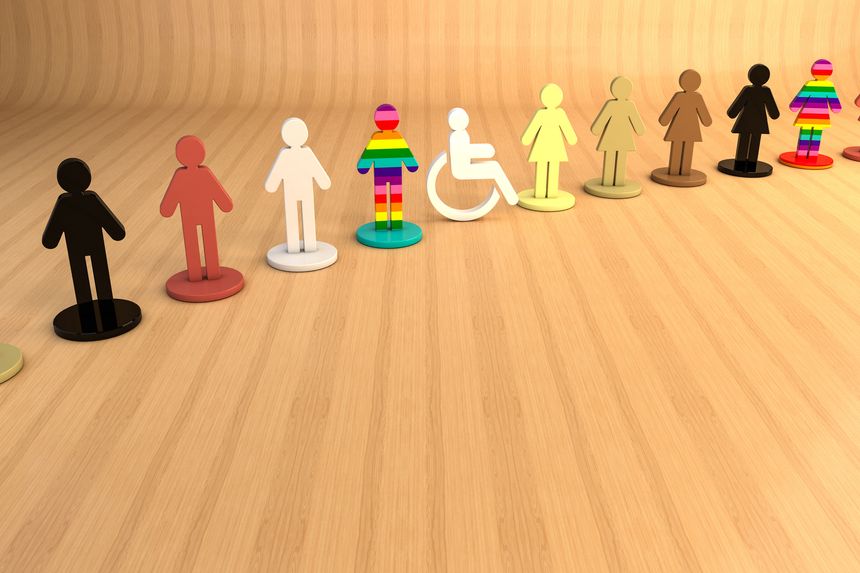
Following commitments made in the King’s Speech in July 2024 and a consultation between March and June 2025, the UK government committed yesterday to introduce mandatory ethnicity and disability pay gap reporting for large employers. It will take forward all but one (relating to additional reporting requirements for public bodies) of the proposals that it consulted on.
What is changing?
The detail and timing of the new reporting requirements have not yet been fully confirmed. What is clear at this stage is that large employers will be required to report on:
- the overall composition of their workforce by ethnicity and disability (also referred to as ‘workforce reporting’); and
- the proportion of their employees who did not share their ethnicity or disability status (‘declaration rates’).
More importantly, in-scope companies will also have to produce an action plan aimed at improving workplace equality for ethnic minority and disabled employees. This will require employers to provide a narrative and context around their pay gap, workforce and declaration rates, and implement policies to support better retention and more inclusive workplaces.
What has to be reported?
In terms of the ethnicity data required for reporting, the government’s announcement suggests this should be collected using the ethnicity classifications set out in the Government Statistical Service’s harmonised ethnicity standard, and aggregated in line with guidance from the Office for National Statistics. Ethnicity pay gaps should be reported using a binary comparison (white/non-white) at a minimum, but ideally aggregating data into 5 broad ethnic groups. There should also be at least 10 employees in each group being reported on to protect employee confidentiality.
Disability pay gap reporting, on the other hand, will adopt a binary approach (disabled/non-disabled) using the Equality Act 2010 definition of disability – many consultation respondents highlighted difficulties in carrying out the data collection which would be necessary to segregate reporting into impairment types. This should also require at least 10 employees in each group being reported on.
The new ethnicity and disability pay gap reporting methodology is anticipated to mirror the existing framework for mandatory gender pay gap reporting as far as possible. This would include using the same geographic scope and ‘snapshot’ dates, requiring the same six pay calculations, and utilising the same online reporting service and enforcement mechanisms.
In relation to action plans, the government’s intention is to have the regime dovetail with newly-implemented requirements for action plans to address the gender pay gap and support employees going through menopause. The end result should be a single harmonised ‘equality action plan’ that employers can publish to fulfil all the relevant requirements.
This consistency will be welcomed by employers, many of whom will be in the process of submitting their latest gender pay data for 2025 (the deadline for private companies is 4 April 2026), and preparing to publish an equality action plan in 2027 (voluntarily) or 2028 (mandatorily).
How do we compare to the EU?
The move marks a further divergence of the UK from the European approach to pay transparency. The UK’s proposals to mandate ethnicity and disability pay gap reporting demonstrate a clear focus on equality. On the other hand, the PTD focuses on pay transparency more broadly – while it mandates gender pay gap reporting by large employers, it also introduces some rules concerning recruitment processes, such as:
- requiring employers to advertise salary ranges for job vacancies and preventing them asking applicants about their current and past wages.
- rights for workers in situ to request information about the average pay rates of their comparator colleagues.
These measures do not currently form part of UK law, although the government published a call for evidence on similar pay transparency provisions last year, and has yet to publish its response. We may yet therefore see closer alignment in the longer term. It may be that the UK government will seek to learn from the early implementation of the PTD in Europe before committing to its own plans.
In the meantime, multi-jurisdictional employers are left facing a patchwork of different pay transparency requirements. This creates tensions where employers strive to produce a consistent group-wide approach to pay transparency, whilst also ensuring compliance with local laws.
A number of large UK employers have been voluntarily reporting ethnicity pay gaps for several years, but disability pay gap reporting is far less common. Mandatory reporting will level the playing field and increase transparency relating to inequalities. The government also hopes that it will contribute to its ongoing mission for economic growth, citing evidence that more diverse workplaces are more productive.
What should employers do now?
Companies who are not already voluntarily reporting ethnicity and disability pay gaps will need to assess if they are within scope of the proposed regulations, and formulate an approach to ensure compliance within the indicative timelines. Part of this will be setting up data-collection processes to ensure that they have the ethnicity and disability data to run the calculations. Employers should then analyse the data they have calculated to identify areas of concern which have to be addressed, develop narratives relating to any pay gaps identified, and formulate action plans to address these areas of concern.
Action plans for addressing gender pay gaps are being introduced on a voluntary basis from April this year. Many employers are already considering measures they could take to produce and implement gender pay action plans, utilising guidance recently published by the government. Companies may therefore want to expand their thinking to cover ethnicity and disability pay gap reporting, to anticipate this newest development.
A watching brief will be required for the regulations prescribing the detail of the new reporting requirements, guidance to help employers comply which the government has promised to publish, and the timing for implementation. If the existing snapshot dates are used, companies may need to be prepared to collate data on 5 April 2027, to report by 4 April 2028. That may seem some distance away, but with the myriad of other legislative changes facing employers this year and next, forward planning will be crucial.
/Passle/620e2412f636e9042828e117/SearchServiceImages/2026-10-16-08-57-48-256-6ad1e70caa6596dee34c175c.jpg)
/Passle/620e2412f636e9042828e117/SearchServiceImages/2026-10-15-13-54-00-458-6ad0daf8d13e4bbdf6a78376.jpg)
/Passle/620e2412f636e9042828e117/SearchServiceImages/2026-10-08-08-19-22-494-6ac7520ace624e48d6cca211.jpg)
/Passle/620e2412f636e9042828e117/SearchServiceImages/2026-09-30-18-36-52-571-6abd56c49f08a2dbc96d2b29.jpg)