


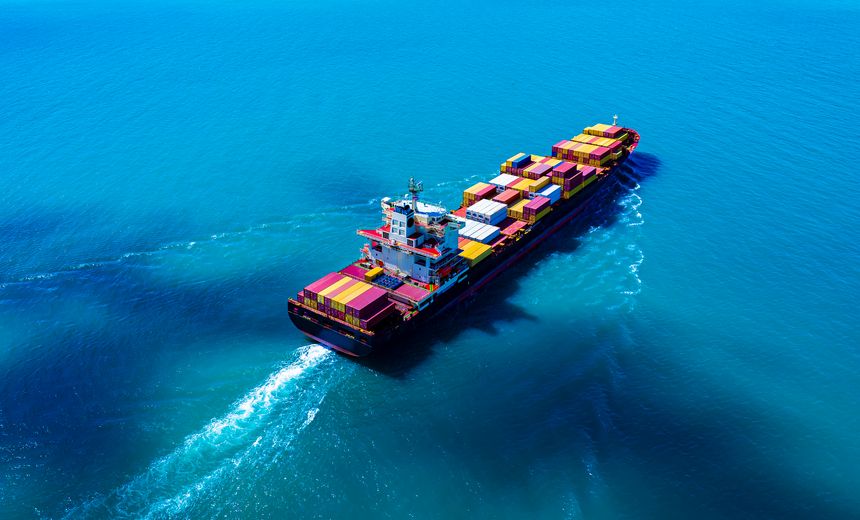
On 17 October 2025, the International Maritime Organization ("IMO") postponed its vote on a pioneering carbon pricing framework—agreed in principle in April 2025—to reduce greenhouse gas (“GHG”) emissions in the shipping sector (“the IMO Net-Zero Framework”). The delay, until 2026, follows opposition from over 57 countries. The proposed measures would require ships exceeding 5,000 gross tonnes to reduce GHG emissions intensity by 30% by 2035, and 65% by 2040, against 2008 baseline levels (“the 2008 Baseline”). The postponement creates immediate uncertainty, particularly for ship operators, charterers, commodity traders, and financiers confronting investment decisions worth billions, whilst facing a fragmented patchwork of unilateral regulations.
Dual-Tier Compliance Architecture
The framework establishes a dual-tier system measuring GHG fuel intensity: emissions per unit of energy consumed (rather than absolute emissions). Vessels failing to meet the base target (comprising an initial 4% reduction by 2028, compared to the 2008 Baseline, rising to a 30% reduction by 2035) face penalties of US$380 per tonne of CO2e. Those achieving the base target, but missing the more stringent direct compliance target (comprising a 17% reduction on the 2008 Baseline in 2028, increasing to 43% in 2035), will pay US$100 per tonne on the differential between the two benchmarks. Conversely, vessels exceeding the Direct Compliance Target generate tradeable surplus units, thereby creating financial incentives for early adoption of low-carbon fuels.
Operators emitting above these thresholds may transfer surplus units from other vessels, deploy previously banked surplus units, or purchase remedial units through the IMO Net-Zero Fund ("the Fund"). The Fund would disburse revenues to reward low-emissions vessels and finance developing country transition infrastructure through forthcoming allocation guidelines. The tiered pricing structure is intended to create graduated compliance pressure, whilst avoiding prohibitive costs for incremental improvements. Assuming the IMO Net-Zero Framework is adopted in 2026, implementation would commence in 2028, although the postponement of the vote inevitably makes this timeline increasingly uncertain.
Geopolitical Opposition and Enforcement Risks
The current US administration characterises the framework as a “global carbon tax on Americans levied by an unaccountable UN organization”, and has threatened retaliatory measures, including port access restrictions for vessels registered in compliant countries, as well as potential sanctions on officials sponsoring this initiative. These retaliatory measures may themselves face legal obstacles under trade law principles and United Nations Convention on the Law of the Sea ("UNCLOS") freedom of navigation provisions, and the consequent uncertainty creates immediate commercial risk for operators.
Opposition from several oil-exporting governments centres on the unprecedented nature of a UN body imposing financial obligations on private entities for non-compliance: a sovereignty concern extending beyond climate policy to broader questions of international governance architecture. The postponement further reflects many low-income country concerns that the framework imposes disproportionate burdens on nations operating older, less efficient fleets with limited access to the capital necessary for modernisation. On the other hand, the governments of “Small Island Developing States” and “Least Developed Countries”—most vulnerable to climate impacts—supported stronger measures, perceiving the existing proposals as insufficient. How the Fund addresses these equity concerns may prove crucial to securing the two-thirds majority necessary to pass the 2026 vote.
Port State Control may also offer an enforcement backstop: vessels registered in non-compliant flag states remain subject to inspection and potential detention when calling at ports in compliant jurisdictions. It is a measure that the US is considering to “combat anti-competitive practices”. This effectively restricts non-compliant vessels to domestic routes, though enforcement stringency may vary significantly between ports in different jurisdictions, creating implementation inconsistencies that more sophisticated operators may seek to exploit.
Commercial and Compliance Implications
Non-compliant vessels consuming conventional bunker fuel face potential costs exceeding US$1,000 per tonne, which will either compress operator margins or flow through supply chains to consumers. The magnitude will vary by vessel efficiency, among other factors, although the financial pressure may prove material for bulk carriers and older tonnage vessels operating on thin margins. In contrast, early adopters of low-carbon fuels gain competitive advantages through multiple channels: surplus unit revenues, preferred positioning with shippers pursuing Scope 3 emissions reductions, and potential access to green financing with favourable terms. Charterers may increasingly specify emissions performance in tender requirements, potentially bifurcating the market between “green” tonnage and discounted high-emissions vessels serving price-sensitive cargo.
Crucial contractual questions may emerge around charterparty allocation of compliance obligations and costs. Voyage charter terms may specify which party bears Greenhouse Gas Fuel Intensity ("GFI") charges or captures surplus unit revenues. Time charters raise questions about whether compliance costs should constitute an operating expense borne by charterers, or a capital improvement obligation retained by owners. Industry-standard clauses do not yet address these allocations, which are likely to be negotiation priorities for commercial teams structuring new fixtures. In addition, financial institutions may integrate GFI compliance capacity into vessel valuation and lending decisions. Vessels capable of generating surplus units may command green premiums, whilst high-emissions vessels could encounter difficulties securing refinancing as lenders price in obsolescence risk. This might create asset valuation implications for sale-and-leaseback transactions, second-hand vessel sales, and the portfolio management strategies of ship-owning entities.
Alternative Fuel Pathways and Infrastructure Gaps
The 2028 implementation timeline highlights the potential shortcomings in current infrastructure, such as the minimal green ammonia and e-methanol production capacity, virtually non-existent bunkering facilities and incomplete safety regulations (including IGF Code amendments for ammonia). Most alternative fuel investment also concentrates in North European and Singaporean hubs, creating geographical disparities that disadvantage vessels operating other trade routes.
Additionally, the framework’s inclusion of biofuels without rigorous feedstock sustainability criteria may create perverse incentives. Biofuels can potentially offer cheaper, readily available compliance routes, but risk diverting investment from e-fuels essential to long-term decarbonisation. Operators prioritising short-term compliance may “lock-in” fuel strategies that prove commercially disadvantageous, as regulations tighten after 2035 and consumers demand genuinely sustainable transport rather than nominally compliant solutions.
Parallel Regional Obligations
The IMO Net-Zero Framework operates alongside proliferating regional regulations, with which it establishes layered compliance obligations. FuelEU Maritime, which came into force in January 2025, requires (i) a reduction of the annual average GHG intensity of the energy used by ships (of 6% by 2030 and 80% by 2050); and (ii) the use of onshore supply or alternative zero-emission technologies for ships at berth from 2030. It also mandates “well-to-wake” emissions reductions (capturing lifecycle emissions, including from extraction and production). In contrast, the IMO measures only “tank-to-wake” (limited to onboard combustion). Vessels operating on EU routes must satisfy both regimes, potentially leading to dual charges where regulatory approaches diverge.
From 2024, maritime transport entered the EU Emissions Trading System, imposing costs per tonne of CO2e on EU voyages. Vessels on European routes may thus need to comply with EU ETS liabilities in addition to potential IMO GFI charges, the combination of which could exceed €100 per tonne. The UK ETS follows parallel, but non-identical provisions, which add further regulatory complexity for vessels calling at British ports. This regulatory fragmentation—precisely the outcome multilateral coordination seeks to prevent—grows more probable with each IMO delay, and compels operators to implement sophisticated compliance strategies to address multiple simultaneous obligations, rather than singular global standards.
Conclusion
The postponement exposes fundamental tensions in international climate governance: between low and high-income economies, environmental ambition and commercial pragmatism, multilateral coordination and unilateral regulatory divergence. While the 2026 vote is likely to produce a modified framework reflecting these political realities, the precise nature of such revisions remains uncertain. For maritime industry participants, several imperatives emerge. Firstly, the need to model GFI compliance costs across current fleet compositions under various fuel price scenarios to identify exposure and opportunity. Secondly, negotiating charterparty clauses explicitly to allocate carbon pricing obligations and surplus unit revenues between owners and charterers. Thirdly, developing fuel transition roadmaps that anticipate both IMO implementation and parallel regional frameworks.
Indeed, the International Chamber of Shipping warns that, without global standards, the industry confronts an escalating patchwork of unilateral regulations that increase costs without effectively advancing decarbonisation objectives. That risk continues to crystallise as the IMO delay persists and as regional authorities—particularly the EU—advance their own mandatory frameworks. Ship operators, charterers, and consumers should prepare for compliance, whilst recognising that fulfilling multiple simultaneous regimes may define maritime GHG regulation for the coming decade.
/Passle/620e2412f636e9042828e117/SearchServiceImages/2026-10-08-08-19-22-494-6ac7520ace624e48d6cca211.jpg)
/Passle/620e2412f636e9042828e117/SearchServiceImages/2026-09-30-18-36-52-571-6abd56c49f08a2dbc96d2b29.jpg)
/Passle/620e2412f636e9042828e117/SearchServiceImages/2026-09-28-10-58-21-290-6aba484d266cd4c9ede6a6fe.jpg)
/Passle/620e2412f636e9042828e117/SearchServiceImages/2026-09-16-09-34-00-080-6aaa62884c0adca8a36cc07b.jpg)